Showing posts with label #sustainability. Show all posts
Sunday, January 18, 2015
10 Reasons to Eat Locally
Here are 10 great reasons to eat locally provided by Slow Food Seacoast.
1. Taste the difference: At a farmers market, most local produce has been picked inside of 24 hours. It comes to you ripe, fresh, and with its full flavor. Did you know that on average your food travels 1500 miles to get to your plate? Also local food varieties can be bred for taste rather than their ability to withstand long journeys and a long wait in the grocery store before being purchased for consumption.
2. Know what you are eating: When you buy from the farmer you have the opportunity to discuss what their farming practices are, whether they used chemical fertilizers, genetically modified seeds, Were the animals fed a healthy diet and raised humanely without pesticides, hormones or antibiotics.
3. Meet your neighbors: Studies show that people who shop at farmers' markets have 10 times more conversations than their counterparts who shop at supermarkets.
4. Get in touch with the seasons: When you eat locally, you eat what's in season. You'll remember that cherries are the taste of summer. Even in winter, comfort foods like squash soup and pancakes just make sense- a lot more sense than flavorless cherries from the other side of the world.
5. Discover new flavors: Ever tried sunchokes? How about purslane, quail eggs, yerba mora, or tayberries? Count the types of pears offered at your supermarket. Maybe three? Small farms are keeping alive nearly 300 other varieties.
6. Explore your home. Visiting local farms is a way to be a tourist on your own home turf, with plenty of stops for snacks.
7. Save the world: A Study in Iowa found that a regional diet consumed 17 times less oil and gas than a typical diet based on food shipped across country the country. The ingredients for a typical British meal, sourced locally, traveled 66 times fewer "food miles."
8. Support small farms: In areas with strong local markets, the family farm is reviving. That's a whole lot better than the jobs at Wal-Mart and fast-food outlets that the globalized economy offers in North American towns.
9. Give back to the local economy: A British study tracked how much of the money spent at a local food business stayed in the local economy, and how many times it was reinvested. The total value contributed to the local economy was almost twice the contribution of a dollar spent at a supermarket.
10. Be healthy: Eating local usually means more vegetables and fewer processed products, a wider variety of foods, and more fresh food at its nutritional peak. Eating from farmers' markets and cooking from scratch, you'll never feel the need to count calories.
During our visit to the farmers' market today, Hubby and I were inspired to "put our money where our mouth eats" and not make a visit to the grocery store between now and the next farmers' market. We are going to work on eating up the things we canned and froze from our garden, foods we have in the pantry, some of which where gifts from other farmers and wild harvesters and some of which came in our CSA or from our local health food store and local foods market. We are very fortunate to have a market less than 10 miles from our house that sells local produce, meat, and even locally prepared foods such as jams, jellies, granola, candies, coffee roasted locally and more. But even this we will avoid for the next 21 days. We'll have some pretty interesting meals in the mean time, and we'll share photos, tips and recipes. Tonight: roasted kohlrabi with old bay seasoning on a bed of greens with local bread from Leaven, falafel and eggplant fattoush from Karimah's Kitchen.
Monday, December 15, 2014
The High Price of Cheap Food
As Americans we are spending less of our disposable income on food then ever in recent history. A Pew study published earlier this year found that from 1970 to 2009 the percent of disposable income spent on food has gone down from roughly 25% to less than 10%. During the same time period caloric intake on average increased by almost 22%! There have been a lot of studies about how all these cheap calories are affecting obesity rates and the health impacts of this increased rate of obesity on Americans. The impact of increased rates of heart disease, cancer, diabetes depression, and other health and social impacts upon our society are serious, but only the tip of the iceberg when it comes to the high price of cheap food. We have to look into the grain fields in our heartland and the produce farms and orchards of the west coast and beyond our borders to begin to get a picture of the greater price of our cheap food. There are ecological, political and human social impacts of our industrial food system that spread across the globe.
Here are some statistics that start to paint a picture of food prices as percent of income throughout the world. According to an article published by Tree Hugger Americans spend approximately 5.5% of disposable income on food at home while folks in Germany, France and Italy spend 11.4%, 13% and 14% respectively. When we look into the developing world the numbers are even more staggering. Beginning with South Africa at 20.1% and increasing through Mexico (24.1%), Turkey (24.5%) Kenya (45.9%) and Pakistan at (45.6%). This opens up questions about economic and resource exploitation of the developing world by the first world. Many people throughout the world live in areas where more diverse crops can be produced, but over the last 75 to 100 years as the prevalence of large agribusinesses has grown, the habit of growing more diverse crops has given way to monocultures that harm both the environment and the local economy as well as the farmers who depend upon food production for their livelihood.
We have been hearing more and more about the dismal conditions of agricultural workers and farmers throughout the developing world. These workers are being treated very much like indentured servants and in some cases little better than slaves. Farmers in many developing countries have been driven out of business by competition from cheap food imported from the first world as well as by the demanding aesthetic standards of American produce buyers. Further the economic policies followed by many seed producers further victimize the small farm holders in these developing countries. Many have heard that farmers account for 11.2% of suicides in India. Some of the reasons cited for these suicides include stresses from, high operating costs, farm indebtedness, crop failure and pesticide use, among others. What we haven't been hearing about is that these statistics are similar to those for farmers in other parts of the world. Environmental degradation of farm land is further exacerbating the plight of farmers around the world.
That's a lot of statistics and gloom and doom. So what is the point of all of this and what can we do to change the situation? So many times we feel hopeless and feel that as individuals, there is really very little that we can do to have an impact on these dire trends. The fact is that is the farthest thing from the truth. It is only we, as individuals that CAN have a true impact. But we all have to make the commitment to make a personal change. And what is that change? As with any situation, we can vote with our wallets and pocketbooks. Fresh, local, organic produce is the healthiest produce you can eat. It is also the most economically and environmentally sustainable; because it keeps dollars in the local economy and reduces the amount of green-house gasses used in the production, storage, distribution and sale of factory farmed produce. And this is only scratching the surface of the environmental impacts of factory farming that can be mitigated by dedicating ourselves to purchasing our produce from our local organic farmers. The same principle applies to our meat, dairy and grain products. So please do your part and support your local organic farmer.
Saturday, November 1, 2014
Happy New Year Revolutionaries
Happy New Year, and welcome to a new revolution! One year ago today I began One Earth Revolution to see what could be accomplished for our planet in one year along with the help of my family and friends. I will be honest, it has been a slow start. There have been some personal and logistical challenges, but I also have a sense of real progress. I have seen myself and my family begin to truly live by ethics and principles which we believe will help to sustain our community and our planet well into the future. We have become involved in many groups that are rebuilding the sense of community in our town and are actively working to create a future for our village which is both economically and environmentally sustainable, and not only sustainable but bountiful without being damaging to our ecology. This year has also seen the conversation of sustainability and a post carbon future really making inroads in the mainstream media. While there are still many naysayers and not a few people who staunchly refuse to remove their blinders and see the coming storm, we have begun to see real evidence that people are beginning to awaken to the real dangers of climate change. There is so much more to be done!
This weekend Hubby and I have spent two days in contemplation and meditation on our property, on our planet, and on our personal feelings and goals surrounding both. We spent a day being grateful for the achievements and blessings of the past year and letting go of anything that happened during the past year that we do not want to bring forward with us. We spent today looking forward to the challenges and promises of the coming year.
This year I finished my permaculture design certification and I'm now saving up for the advanced class. Meanwhile our homestead continues to take shape and we begin to see the real beginnings of the permaculture demonstration sight that we would eventually like to have here. In the coming year we plan to install cold frames, expand the plantings in our fledgling food forest, erect a greenhouse and so much more. Stay tuned for an Indiegogo campaign announcement early in the calendar year.
And One Earth Revolution? We've got plans for you too. We'll be better than ever with field trips, regular feature pieces on the permaculture ethics and principles, recipe share, farm hacks and so much more. We may even have a podcast in store for you. So stay tuned here and you'll be in the know about everything that's happening on the farm and with The (R)evolution.
Sunday, October 19, 2014
Saving the Environment Starts at Home - Tips for Beating the Take-out Habit
![]() |
| Image from Maple and Spice |
Happy Sunday readers. It's a cloudy October morning here in southern Maine and I'm thinking about breakfast. It's kind of a tradition in our family to have a nice breakfast on Sunday. In the past we have often gone to a favorite restaurant close by our home, and still do occasionally, but lately we've started making that Sunday breakfast at home more often and incorporating things from our own garden and from local farmers into our meal. There are two reasons for this: 1) insuring that we are using local ingredients and 2) reducing the size of our food budget. If you are wondering how these two things tie in to protecting the environment, it is quite simple and comes down to transportation. The more local our food is, the fewer miles it had to be transported using fossil fuel burning planes, boats, trains and trucks. The fewer dollars we spend on food and the more often we eat at home the more we save and the less we commute to earn the money to pay for it. We also save the trip to to restaurant. These reduced trips also reduce wear and tear on our vehicle, further reducing our impact on the planet.
So as I sat here thinking about breakfast, it reminded me that I had promised you some tips and recipes for beating the eating out and particularly the stopping for takeout habit that is so easy to fall into.
The first and particularly timely tip is making ahead. Quiet Sundays are a good opportunity to do a little extra cooking that will make meal prep later in the week quicker and easier, reducing the temptation to just pick something up on the way home or hitting the drive through on the way into the office because you rushed out the door without eating breakfast AGAIN. Here are a couple of things that I like to do that are surprisingly helpful. I scramble up a batch of eggs and vegetarian sausage and wrap it up with a bit of cheese in a half dozen burrito wraps and freeze them. A couple of minutes in the microwave in the morning and I have a hot hearty home made breakfast. You could also defrost in the fridge over night and warm it in a skillet if you are not a big fan of the microwave.
Another thing I like to do on Sunday is making up a pot of rice and a pot of pasta. I divide each into two containers and refrigerate one of each and freeze the others. I then have a base carbohydrate that I can build a meal on with a quick zap in the microwave or two minutes in hot water. You can make mashed potatoes ahead as well, but they are more of a challenge to reheat for those who prefer not to microwave. This generally shaves 5 to 10 minutes off of meal prep which doesn't sound like a lot, but can make a big difference when its late and you are tired and hungry.
One of the most challenging things about making dinner after a long tiring day is deciding what to make. This question taken at the end of the work day can often lead to decisions that we regret later, like the habit of eating a lot of prepackaged frozen food from the super market. This is probably as bad for the environment as the takeout given the damage that industrial agriculture and meat production do. One way to get around this is plan ahead. While your pasta and rice are cooking, spend a few minutes to jot down a menu for the weeks evening meals. This will save time and frustration later and will allow you to be prepared and be sure that you have all the ingredients you need on hand.
None of these things are rocket science, and you've probably heard them all before in the context of time management, but perhaps thinking about how these tips can help save the environment is a more compelling argument to get us to start employing them, or employing them more often.
I also promised you a recipe. Here is one that we found recently that we really enjoyed and was quite simple. Start with leftovers and a recipe of "Quick and easy Pizza Crust". Divide in half and roll into two circles about 7 inches across. On one half of each put some diced leftover veg from your fridge anything like broccoli, cauliflower, spinach, mushrooms, etc. works, add some diced tomatoes and Italian seasoning, and sprinkle on some shredded cheese. Now fold the other half of the dough over and pinch it closed. Bake per the dough instructions (you might be able to shave a few minutes off the cook time, so watch them carefully) and voila! you have two tasty filling calzones in just minutes. They are a meal by themselves or pair with a small salad.
All this writing about food has made me hungry. I think I'll go get that breakfast I was thinking about. And there is the vegan sausage recipe that I'm wanting to try out....
Thursday, October 9, 2014
Unveiling the Seeming Convenience of our Modern Lives
These days, with our fast-paced work-a-day lives, we often do things that seem convenient at the time. That is they SEEM to save us time or money or energy. But often that seeming convenience is only on the surface. When we unpack these habits and look at their hidden cost we find a completely different story. This post is number one in series on revealing these hidden costs. We'll explore various habits, look at the hidden costs and also look at developing new habits that can set us free to live a truly convenient and content life.
The first seeming convenience that we are going to look at and one that I fell into for a time myself some years ago is stopping for take-out on the way home from work. On the surface it seems to save us time and energy. What could be easier? You make a phone call (perhaps from your cell, from the car), and you run in and pick up the food and you are off home to eat. But what are the hidden costs?
- Added dollars to your food budget (it's much more costly to eat out than cook at home)
- May take you out of your normal route on the way home adding time to your commute and cost of gas and wear and tear
- Additional cost to the environment of the extra driving and the packaging of the food
- Negative health impact, as most take-out foods pack far more salt, fat and calories than food made at home.
- More hours at the gym to work off all those extra calories, and the cost of the gym membership
- More hours at work to pay for it all.
That take out meal sounds a lot less convenient now. Doesn't it?
Next time. Tips for breaking the take-out habit.
Wednesday, October 1, 2014
Wake Up America! _ No More Time to Snooze on Climate Change
I've heard some very disturbing things over the past few days that have just made me want to shout, Wake up America! We can't keep snoozing when it comes to climate change. We need to spend our carbon resources on replacing the systems that use them so that we can have a carbon free future.
Following are some news stories from recent broadcasts that have me deeply concerned. These do not include the stories which directly refer to climate change and other environmental issues which are associated with and can be linked to climate change, such as exploding tick populations increasing moose mortality, ocean acidification and sea level rise, just to name a few.
Americans are considering lifting the ban on oil exports. Their primary motivation? Money! Of course. I'd like to hear more stories that stem from someone whose primary motivation is looking to the future of our planet and the survival of our species for the long hall, not just how fast and how much people can line their pockets so they can live high off the hog today and Devil may care what happens when they are gone!
Maine's governor, Paul LePage supports a proposed federal law which would increase federal control of natural gas pipeline permitting and could result in private corporations having the ability to take private land by eminent domain. This is yet another example of short sighted profit seeking in my opinion and likely a result of the impact of corporate money on campaigns and politicians. While Governor LePage claims he is supporting this to reduce the cost of heating for Maine families, he ignores the fact that natural gas is not a truly green or sustainable answer for the long haul and has not put resources and energy behind finding clean renewable solutions that Maine will benefit in the future.
A so called right to farm bill passes in Missouri. This amendment to the state constitution protects the "rights" of big agra business and is one more example of corporate greed finding a way to legitimize itself through legislation which favors large corporations over small independent businesses. It is a step in the wrong direction in the fight for a more diverse, distributed, sustainable food system in the United States.
A drought in California which has been exacerbated by climate change keeps the fire danger high. Forest fires blaze in California as the drought continues. According to the California Department of Food and Agriculture, California accounts for nearly half of US grown vegetables, fruits and nuts. This is of grave concern for food security, but also for the environment and for resource management, as with its large population, California is also a top consumer of water resources. In addition to the water woes inherent in having so much of our agricultural capacity concentrated in one corner of the country, this state of affairs also leads to increased transportation costs and a host of other environmental concerns stemming from the construction of infrastructure to the fuel to power the trucks and trains that transport the produce. In addition, there is far more waste in such a system, due to spoilage and damage in transportation; while the food that is produced is not as nutritious as local food because it is picked before it is ripe and then consumed long after it has been harvested.
I know that this piece sounds like a lot of gloom and doom. And that isn't really what I intend to be. I do believe that there is a lot of hope for our future. We are standing at a cross roads and we have all the tools we need to make a better, brighter more verdant future, if we choose the right path. I had a lot of things to say, but I don't think I can say them any better than Morgan Freeman says them here in this video: (What's Possible) It's more than worth your time.
Friday, July 4, 2014
Sustainability and Local Agriculture in the News
![]() |
| A beautiful garden in Arundel, Maine |
![]() |
It is refreshing to see the growing interest and focus on sustainability in both print and broadcast media. In a society where so much of our news can be sensationalistic tripe, it's nice to get some good news on occasion. Local public radio stations and college stations across the country and around the world now have regular sustainability features. Sustainability podcasts are growing in both popularity and availability, and print media are regularly featuring articles on local and sustainable aquaculture, agro-forestry and agriculture.
A recent article in The Weekly Sentinel showcases the work of the students and teachers at the School Around Us in Arundel, Maine as they engaged in a three day hands on workshop on sustainability that created a temporary eco-village in a wooded area near the school. I recently graduated my permaculture design course with a mom of one of the school's students, and during the course had the opportunity to tour the school and surrounding community with some of the permaculture pioneers in our area. I was deeply impressed and motivated by the work that is being done there at the school and at nearby Frinklepod Farm, which is run by one of the school's early students and son of the founders of School Around US.
Interdependence. Abundance. Resilience. Sustainability. These are all phrases that we think about when we engage in practicing the permaculture ethics of earth care, people, care, and fare shares. In backyards all around us, gardens are becoming popular again and chicken coops are popping up. It should perhaps be little surprising then when we see more an more articles dedicated to the glories of sustainable local agriculture. Of note, in this line, an article by Craig Idlebrook in the July/August 2014 issue of Northern New England Journey titled "The Egg and I" extols the virtues of backyard egg operations in Maine and how a serendipitous stop at one such operation lead him to discover the wonders of farm fresh eggs and made him a life long fan. It is a charming article and ends with a reminder about the rewards of supporting local agriculture. Hats off to you Craig for this nostalgic and heartwarming piece. In recognition of your support of local agriculture, I would be happy to present you with a dozen eggs free of charge should you stop by my farm stand some day.
Until next time - "Deep peace of the sleeping stones to you"
Tuesday, May 13, 2014
What I Did for Mother's Day - Hugel Happiness
My son could not believe his ears. He had to ask me again just to be sure. "You really don't want me to buy you anything for Mother's Day? You're sure?" I assured him that agreeing to help me build a hugelkultur bed was going to be more than enough for a Mother's Day gift. I'm not sure he really believed me until he spent 4 hours in the 70 Degree sun this passed Sunday building my beautiful hugelkultur bed.
In this last photo we are about half done with burying the woody debris. It's not quite finished yet, but we made a lot of progress. It still needs some top dressing with additional soil, compost and a good layer of straw mulch. We are going to plant medium bush blueberries on top of this mound. On the south facing side we will have sun loving strawberries, and on the north facing side we will grow shade loving greens. I can't wait to see what kind of yields we get. This and the fledgling orchard that you may notice to the right of the hugelkultur bed in some of these photos are some of our first steps toward our permaculture perennial food forest and garden.
First the base of the bed. In the fall we had laid down cardboard and topped that with our corn and sunflower stalks. Then we added our yard clippings and dried leaves. Over the winter we added our kitchen scraps. On top of all this we laid a lot of wood from standing dead trees that we had to take down for safety. Then we began to cover it with a load of loam that we had brought in.
We haven't been working our land long enough yet to have developed a large pile of well composted material for making top soil. My guys were handy carting all that soil. And this is when my son realized just what he'd got himself into. We were about 3 hours into the project at this point. I was in there wielding the shovel and hauling logs too, but I did have to pause occasionally to take the photos.
| My Guys! They worked so hard! |
I will continue to post photos as the food forest progresses. Until next time - Live Light!
Wednesday, April 30, 2014
When Will We Learn?
If the spike in fiery train derailments doesn't get us to start seriously rethinking our dependence on fossil fuels, I don' t know what will. Yet another today in Lynchburg, Virginia. So what do we do?
Some steps that we can take (this is only the tip of the iceberg, there are so many more)
- Decreasing our use of fossil fuel generated electricity by: changing to LED lighting, turning down the heat, eating more raw foods, putting lights on timers, using energy efficient appliances, reducing our reliance on electricity by hanging clothes to dry, washing clothes in cold water, and on and on. There are many great websites on reducing electricity consumption. A quick internet search will turn up dozens.
- Converting our electricity production to a non-centralized distributed grid powered by alternative energy sources.
- Converting our home heating systems to non fossil fuel systems.
- Becoming a one car family
- Car pooling and or using public transportation
- Negotiating work from home arrangements with employers for at least part of the work week or changing employment to something closer to home.
- Reducing our use of products which are derived from petroleum. This takes some effort, research and label reading. As you know most plastics are derived from petroleum, but what some people don't realize is that many chemicals including those in our pharmaceuticals are also derived from petroleum. Other materials that contain petroleum derivatives include clothing, fertilizers, building materials, cosmetics, the list goes on, but one that might surprise you-petroleum by products can even be found in your FOOD! That's right there are petroleum by products in some food preservatives. See a PARTIAL list of products here.
Some of these steps are not easily achieved, but they are worth aiming for and they are worth working toward. Every step we take in the direction of reducing our dependence on fossil fuels is a step in the right direction and buys mankind another minute of breathing freely and living well on planet earth.
Live light my friends!
PS. I don't care what they tell you Fracked Natural Gas is NOT the solution to oil. It is just a different path down the road to destruction.
Sunday, April 27, 2014
Follow Me - Contest - Big Announcement
Pictured above is the cover of "Cool Cuisine; Taking the Bite Out of Global Warming" by Laura Stec. It is both cookbook and handbook in one. This book teaches about the science behind Global Warming and how our food choices impact our planet's health and well being. There are also a number of fun, fabulous, healthy and planet friendly recipes. A good read and great resource. The companion website http://www.globalwarmingdiet.org/ is also a great resource for information on climate change.
This post is a blatant attempt to increase readership, and why not, it's all for a good cause. I have a big announcement coming up and I want to be sure that the news gets out to as many people as possible. It's going to be brilliant, amazing, fabulous and fun!
So, here is what I propose. I have 5 copies of this fabulous book to give away. If you would like to have your name in the drawing, please subscribe to this blog and please send me an email at awensdaughter@gmail.com to let me know that you are subcribing and would like to have your name in the drawing. Also, if you share this post with friends and they subscribe and email me letting me know that you shared the post with them I will put them in the drawing and also add your name in again for each time someone says you recommended them. And if they invite friends who do the same I will do the same for them, and so on. So everyone who subscribes gets their name in and they get their name in again for every person who drops their name as the one who invited them. Winners will be selected by random drawing on the day of the big announcement. Email addresses will be used only for selecting and notifying winners. If you would like to be added to my mailing list for other notifications and announcements please put that into your message. Your information will never by sold or shared with anyone else.
Please share this with as many people as possible. And, due to the nature of the announcement, please share with your friends oversees as well. Let's aim high. Stay tuned here for contest updates and for the big announcement.
And remember:
"Travel light, live light, share the light, be the light."Yogi Bhajan
UPDATES!! Be sure to check the comments for updates on this post. Thanks!
Wednesday, April 23, 2014
Years of Living Dangerously
A new ShowTime series examines the causes and impacts of climate change. While I may not agree with every opinion expressed in this show, I have to say that it definitely gets you to thinking about the impacts of human habitation and activity on the planet's ecosystems. It also examines the social impacts of climate change from poverty to, corruption to war. And it looks into the future and the further impacts of these changes on our environment and climate as we progress through the current century. Please take the time to watch the premier which is available free online at this link http://yearsoflivingdangerously.com/
I find that I can still be shocked by the unbelievable willful destruction of our beautiful wild places for no better reason than greed! Perhaps worse than the greed is the apathy and ignorance of our own individual daily choices. We need to examine our own choices and start holding the corporations that supply our daily needs to task for the actions that they take. We need to exercise our votes in the voting booth but also in the market place. We need to be informed so that we can understand what impact our lifestyles and daily choices are having on our potential future and the potential future of humanity as a whole.
Saturday, April 5, 2014
Return of Surplus - First Fruits
Today I was going to do a post on movements moving together, and I'll come back to that, because I think it is important but this morning, while feeding the compost, I was inspired to share with you an experience I had a few years ago while picking blackberries.
One of the permaculture ethics is "fair share", also referred to as "return of surplus" both terms imply several things. They imply, take only what you need and, when you have more than you need, share it with others in your community. They also imply that we should give or leave a fair share for mother earth and that we should share the knowledge of this practice with others. If we only take and take from mother earth and never give back or replenish the soil, eventually it will be unable to produce more food to sustain us. Think of industrial agriculture as strip mining of top soil...but again I digress, we are talking about return of surplus and first fruits (and we'll come to those blackberries by and by.)
For a time we had a small bowl on our dining room table. Before a meal each of us would place a small offering from our plates into the bowl. We would also pour a small amount of our water or juice into the bowl and we would mention one thing that we were feeling thankful for that day. After the meal we would be take it out and poured it on the earth as an offering and a thanks. I miss that bowl. I want to bring it back. It is a connection to our earth that we too easily forget and it is a good reminder of thankfulness practice, which is so important in our hectic day-to-day lives. It is also a reminder that we need to think about serving the earth BEFORE we think about serving ourselves. And this brings me back to those blackberries.
Several years ago I was out picking blackberries. There were some amazing, large, delicious, juicy fruits. I wanted to eat them all. But then I got to thinking, if I eat all of the very best berries then it will be the small, bitter and pour producing plants that reproduce and after some years all that I would have on my land would be nasty little berries that no one would really want to eat unless they had to. Now blackberries being so prolific and birds being what they are, there isn't really a very great danger of that happening too quickly, but the principle still applies and more so with other more tender, less prolific plants. And this is when I had the Aha! moment. I realized that many scriptures and folk wisdom advocate giving back the first fruits. The first fruits would be early ripening, they would also likely be some of the best. It makes complete sense. If we are going to save seed, we choose the best fruits so that we propagate the best of the specimen that we want to preserve. So seed saving is also a way of giving fair share back to the earth. But the idea here is that we need to think of giving FIRST and that we may need to make some sacrifice, but that whatever small sacrifice we make will be more than paid back by the continued fertility and fecundity of the earth.
Tuesday, March 25, 2014
Transition- A Reprise
![]() |
| Totnes, Devon, England: a transition town |
In a post in December I mentioned the US Transition Movement. I recently came across a couple of great videos done by the founders of the Transition movement, which I will share with you at the end of the post. But first, what is "Transition"? What's all the hype? and why is it important? Transition is a grass roots movement of people taking action toward affecting positive change in our communities and our environment surrounding the most plaguing problems addressing the world and our societies today. Problems such as access to good healthy food and quality healthcare. Issues such as community development and of course climate change, peak oil, and economic sustainability. These initiatives have been mobilizing and unifying communities around the world for the passed 9 years. Transition groups are taking action where action is needed, at the local level, without waiting for government intervention or government funding. This is exactly the kind of action we need in order to achieve the change necessary to rebuild, reshape and reform our societies and our economies into functioning systems that will be stable and sustainable over the next century or more as we deal with the end of cheap fossil energy.
I hope that you will enjoy and be inspired by these videos. And after you have seen them a challenge you to answer this question? Transition New England anyone? How about Mid-Coast, South East, Mid-West, South Central, North West, South West; or how about just the town, block or street where you live? Every movement starts somewhere. Why not right there, right now, wherever you are?
This first is Rob Hopkins, the founder of the transition movement, speaking about the Transition experience of his home town of Totnes, at TEDxExeter. If that gets you excited about the Transition Towns Movement, please what "In Transition 2.0" a more lengthy, but very worthwhile video which goes more deeply into the movement and the "Transition" process.
Cheers.
Saturday, March 22, 2014
Start Up Nights - A Smash Hit
This week Hubby and I attended an event put on by a terrific new local business Leaven Beer and Bread House and the group Seacoast Local; a group that encourages people to shift their shopping to products that are local, green and fair. The event was called Start Up Nights and, like the graphic above suggests, it is a competition of great local innovative ideas. Events like this are really bringing fun and creativity to the localization movement.
It all starts with the pitch. Everyone is given a "pitch plate". You write out your idea for a business and try to encapsulate what it will be, why it is important (what is its niche), how it will be funded, how it will function and profit. You then have 30 seconds to pitch your idea and the three best ideas are selected by voice vote of the crowd. The winners of the initial pitch contest get to select teams to help them develop their idea into a down and dirty, back of the napkin business plan. There are a series of challenges designed to help you refine your idea and it all wraps up with the judges selecting the winners and awarding prizes(but that is secondary). The real prize is the collaboration and camaraderie that develop throughout the evening.
What really impressed me was the number of pitches that centered around local food, and all of them had a strong element of giving back to the community. There was not a single pitch that was purely individualist or profit driven. This event seemed to be a great example of the types of community and awareness building events that are vital for launching a transition town movement in our local area. I hope to see more events like this cropping up (pun intended).
We definitely plan to attend the next event April 17th at 7pm. Hope to see you there!
Wednesday, March 19, 2014
A Little Dose of Inspiration
| Photo from the lexicon of sustainability |
For those of us who have been struggling through a long and difficult winter, and I think that is most of us, a little dose of inspiration sounds pretty good. I came across a great video on YouTube this morning that I will share with you. I also got an email from Hubby with a link to a Mother Earth News article about urban community gardens. I know you've heard urban community garden before, but this one is different. For those of you who are actually living in an urban setting this article is definitely a good read, but those of you living in the burbs or in the country should not disdain to read it as well. I live in what might be termed burban country (lol, yes you read that correctly,) and what really impressed me about this article was how much stronger the community ties became as a result of this project and how much more content and secure the people involved felt. They were actually building community where there had been one in name only, but not in reality.
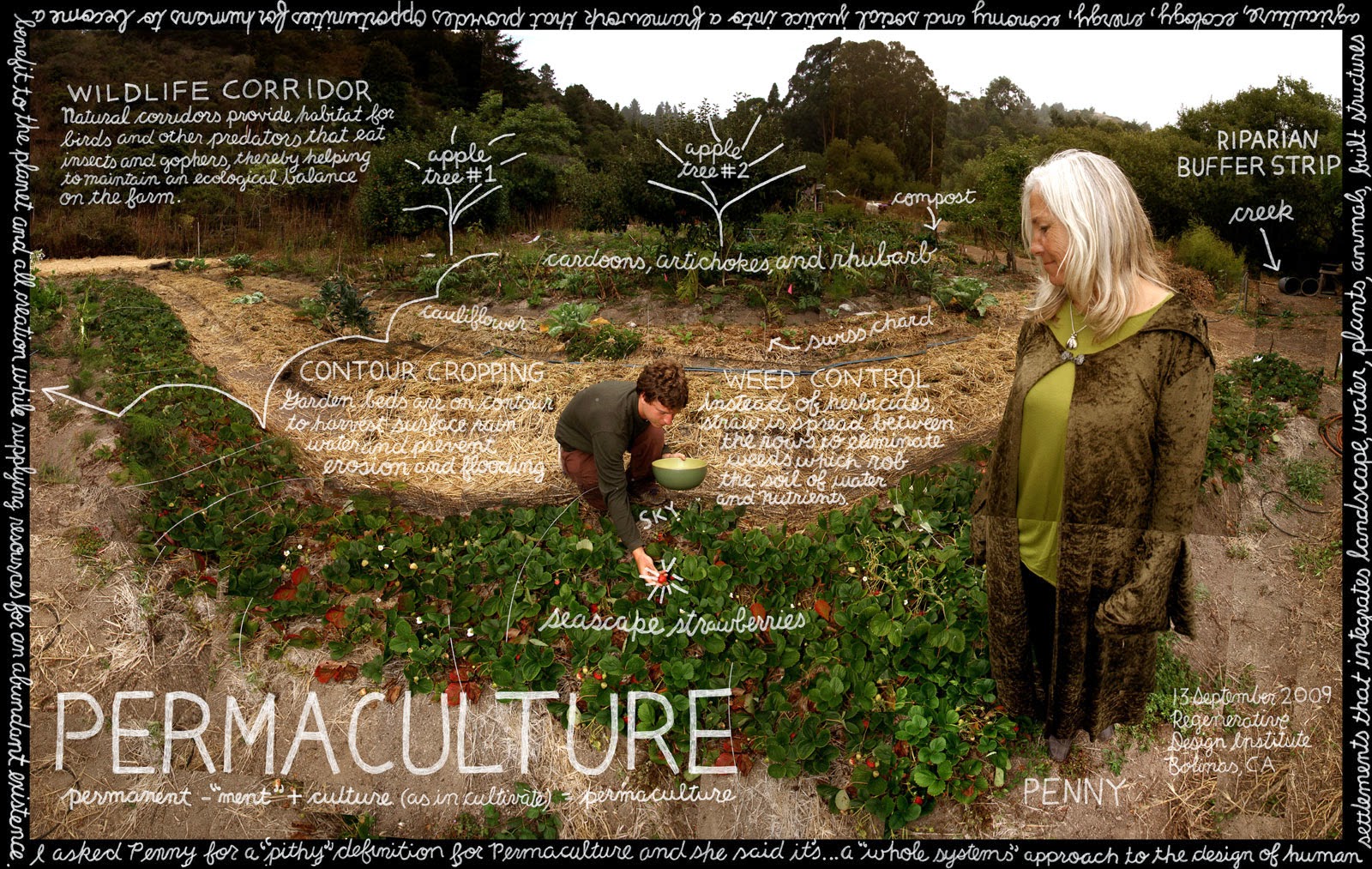
In the video "Permaculture, a Quiet Revolution" we are taken on a journey to the 8th International Permaculture Convergence in Brazil, where over 200 permaculture design course graduates and their mentors from over 43 countries have gathered to learn and to share their experience in order to prepare for and mitigate the looming global crisis. Their goal, to create sustainability now through self reliance. The only way this goal succeeds is if we all join the (r)evolution and share the message with as many people as possible as often as possible. I hope that you will be inspired and that you will catch the permaculture bug and spread it wherever you go.
Live light!
Sunday, March 16, 2014
For further reading and a helping of Link Soup
Sorry I missed you all yesterday. I was doing the final run through on my presentation and packing up all the things for the farmers' market. The market was a huge success and we even had a few people turn out for my talk on permaculture. Thanks to all those of you who were there. I'm just back from the talk and as promised I'm putting up my suggestions for further reading and links. Since I had already scheduled a serving of Link Soup for the post for this weekend I will append those additional links along with this and that should all come together quite nicely. Just the thing for relaxing in the easy chair with on a blustery Sunday afternoon.
So here you go:
Suggestions for further reading:
– Permaculture: Principles and Pathways beyond Sustainability –
David Holmgren
– Introduction to Permaculture – Bill Mollison
– Gaia’s Garden: A Guide to Home-Scale Permaculture – Toby Henenway
– The Resilient Farm and Homestead – Ben Falk
– Introduction to Permaculture – Bill Mollison
– Gaia’s Garden: A Guide to Home-Scale Permaculture – Toby Henenway
– The Resilient Farm and Homestead – Ben Falk
I should also add (though not strictly permaculture books): Deep
Economy by Bill McKibben and Radical Simplicity by Jim Merkel
Link Soup:
–
350.0rg
–
One Earth (R)evolution (You are here)
- Zones and Sectors Efficient Energy Planning
I'm updating this post to add this great link that Hubby sent me. It gets you thinking.
- What are we putting in our bodies?
I'm updating this post to add this great link that Hubby sent me. It gets you thinking.
- What are we putting in our bodies?
So there you have them folks. Enjoy and I hope to see you all at a permablitz real soon.
Saturday, March 8, 2014
A Day in the Life
![]() |
| Intersection repair. Community building event with Portland, OR City Repair |
I''m going to walk you very briefly through a recent day in my life, in order to illustrate some very hopeful things that I see happening in my community and which I believe are starting to happen in many communities across America. Well it's really more like 28 hours, but I know you will forgive the artistic license in favor of a more catchy title. "28 Hours in the Life" just doesn't have the same ring to it.
On Wednesday evening I attended a meeting of approximately 16 local artists. At this meeting many things were discussed including: coordinating with the local farmers' market to offer an art show in conjunction with the market, as we have been doing for the past couple of months, the opening of a new gallery and function space in a neighboring community which many of our artists are getting involved with and will be showing at, the establishment of an artists collaborative at the home and studio of one of our members which will help her to maintain and utilize the space and will give several artists space to work and to show their art, and.... It was a very productive and energetic event and it was great to see the network of relationships that is building between the folks in this group and how they are building a community within a community that helps and supports each other. Rather than competing for resources and customers, they help each other and generate buzz in the community which will attract enough customers for all.
Directly after the meeting, which was held in the public library, I spoke with the librarian and booked my second Lexicon of Sustainability popup art show! It will be at the Berwick Public Library during their 2014 Earth Day celebration. The event day has not been determined. It will either be on Earth Day (April 22) or it will be the Saturday before Earth Day. Stay tuned here for more details. I will also be giving my second introduction to permaculture presentation at that same event.
On Thursday evening (we are now into hours 26-28) I attended a meeting of the Berwick Sustainability Committee. We had a guest speaker who came to talk with us about water protection. The meeting was very productive and we left with more knowledge about the need to protect our ground water and with a plan for how to go about starting. We are looking into resource protection ordinances of course, but we are also looking into community outreach, education and information. We plan to engage local businesses to begin rainwater collection and control projects which will set an example for the town and all residents and we already have our first test site chosen and the approval of the business owner. We will be installing a rainwater collection system and small permaculture herb garden for a local business which we can use as an example when we approach other local businesses. I'll keep you posted in the spring and share photos of the projects as they progress. Oh yes and we'll be involving those wonderful B.A.A artists in this project as well to help us design creative rain chains and other rain directing features and sculpture. So the community network grows and branches and a vibrant and active community begins to fruit and flourish.
It is a good day ...28 hours.. to be alive and living in Berwick, Maine. I hope you see signs of a new sense of community where you live as well.
Wednesday, March 5, 2014
Sustainable Me and One Earth Revolution Hit the Real World
I've been pretty quiet through the winter months, enjoying my CSA share and delving into research on sustainability and permaculture. Sharing with you when I found something worth the while. As spring approaches Sustainable Me and One Earth Revolution are launching into high gear. We're taking our message out into the real world with presentations, art shows and more. Stay tuned here for more information and event calendar. Some things you can expect: Introduction to permaculture speaking date(s), Lexicon of Sustainability Pop-up Art Show dates, and announcements surrounding the establishment of Hour Share of the Berwicks.
Here is the information on our first event:
Introduction to Permaculture speaking date: March 16th at 12:30 PM at the Berwick Town Hall. 11 Sullivan Street, Berwick, Maine 03901
This event will be held in conjunction with the Berwick Winter Farmers' Market.
Hope to see you all there.
Monday, March 3, 2014
Waste Not Want Not - Made Pet Food Today
I said I was going to do it and I did. This evening in about a half an hour and with some leftover items that might otherwise have gone to waste I made enough pet food to feed these two little darlings for about a week. I had this half eaten duck that we had tossed in the freezer after Christmas dinner. We figured we would do something with it before long. We had boiled the duck yesterday thinking we were going to make soup, but just weren't feeling like it last night and ended up making a simple vegetarian dinner. And then we had this casserole dish full of couscous that was a bit overcooked and mushy. So this evening I picked all the meat off the duck and pureed it in the food processor. I mixed this with the couscous and made a nice thick meat paste which I taste tested on both the cat and the dog. They lapped it up! Literally. So I figured it was a winner and proceeded to package it up in 1/4 cup servings using an ice cream scoop and some squares of wax paper. When I was all done I had about 32 patties in a gallon zip lock.
Now I can just take a couple of patties out in the evening and put them in the refrigerator to defrost. They should be ready to go by the next morning. It will be a nice treat for the pets and will reduce my pet food bill while reducing my waste. I wouldn't give this to them every day, because I'm not sure that it would provide 100% balanced nutrition. I would recommend looking into well researched and recommended recipes on line or check with your vet, if you are planning to start providing all of your pet's food.
This experiment just reminded me that when we use our creativity and think outside the box we can help to reduce waste and supply our own needs while saving money. I think I will probably try this again in the future with other leftovers.
Another great thing about this. Since we eat local meat and organic foods, I know that what I'm feeding my pets is just as healthy as what I'm eating myself, and that is something I can 't be assured of when I am feeding them pet food from the store or even from a local feed store for animals.
Sunday, February 9, 2014
One Man's Journey - Ben Falk TEDx Talk
Ben Falk's journey to a sustainable life takes an all too familiar route from growing up in the suburbs to some eye opening experiences in college and finally to a small farm in Vermont were he is learning and teaching the use of permaculture principles in creating a sustainable ecosystem on his 10 acre hillside lot.
Ben's TEDx Talk takes you through those experiences and shares some of those eye openers. They are the reasons that we need to get in front of the movement for change and really start making some decisions in our daily lives that can have a positive impact on where things are going. It's not enough to just recycle a few things. It's not enough to car pool once or twice a week or take public transportation instead of driving. We need a radical cultural shift in the way we live and consume.
Please listen to Ben's talk and really let yourself hear the message. Don't take a jaded view or simply look away when he shows you pictures of the devastation wrought by factory farming and livestock feedlots. When you see pictures of tanks in the desert and when he talks about the desertification of the fertile crescent stop, really stop and think about what you are putting on your table. Think about your daily activities and about the things you buy. Think about the energy and resource demands that you as an individual make on the planet. I think many of us who are trying to be more environmentally conscious think "well at least I'm not as bad as that one. He's driving a huge SUV and lives in a 3000 square foot house." Well that may be true, but I would have to guess that the greater number of us could be doing way more than we are to make this a more just, healthy and equitable planet to live on.
Subscribe to:
Posts (Atom)