Showing posts with label #farming. Show all posts
Tuesday, January 13, 2015
Living on One Dollar
Hubby and I just watched the most amazing movie about 4 young college students who went on an amazing adventure to find out what it is really like to live in a developing nation on 1 dollar a day. What they experienced and the story they tell will move you to tears and to action.
Please watch this video. Please share it with everyone you know. One message you will hear in this film is the concept that there are actually more people in the world who are not poor than there are people who are poor. We are often presented with the image of throngs and masses of nameless poor and we feel powerless to help. In this film you will see individuals with faces and names; children, mothers, fathers and grandmothers that you can help. If everyone who can help, helps just one person who needs help, what a wonderful change we will see in this world.
Living on a Dollar (Movie Link on Netflix)
After you have watched the movie please consider visiting their site and making a donation either to help them continue their work (click on the upper donate button) or to make a contribution directly to the community either through micro loans or educational scholarships (lower/ green donate botton)
Here is the link: Livingonone.org
Thank you and Namaste!
Monday, December 15, 2014
The High Price of Cheap Food
As Americans we are spending less of our disposable income on food then ever in recent history. A Pew study published earlier this year found that from 1970 to 2009 the percent of disposable income spent on food has gone down from roughly 25% to less than 10%. During the same time period caloric intake on average increased by almost 22%! There have been a lot of studies about how all these cheap calories are affecting obesity rates and the health impacts of this increased rate of obesity on Americans. The impact of increased rates of heart disease, cancer, diabetes depression, and other health and social impacts upon our society are serious, but only the tip of the iceberg when it comes to the high price of cheap food. We have to look into the grain fields in our heartland and the produce farms and orchards of the west coast and beyond our borders to begin to get a picture of the greater price of our cheap food. There are ecological, political and human social impacts of our industrial food system that spread across the globe.
Here are some statistics that start to paint a picture of food prices as percent of income throughout the world. According to an article published by Tree Hugger Americans spend approximately 5.5% of disposable income on food at home while folks in Germany, France and Italy spend 11.4%, 13% and 14% respectively. When we look into the developing world the numbers are even more staggering. Beginning with South Africa at 20.1% and increasing through Mexico (24.1%), Turkey (24.5%) Kenya (45.9%) and Pakistan at (45.6%). This opens up questions about economic and resource exploitation of the developing world by the first world. Many people throughout the world live in areas where more diverse crops can be produced, but over the last 75 to 100 years as the prevalence of large agribusinesses has grown, the habit of growing more diverse crops has given way to monocultures that harm both the environment and the local economy as well as the farmers who depend upon food production for their livelihood.
We have been hearing more and more about the dismal conditions of agricultural workers and farmers throughout the developing world. These workers are being treated very much like indentured servants and in some cases little better than slaves. Farmers in many developing countries have been driven out of business by competition from cheap food imported from the first world as well as by the demanding aesthetic standards of American produce buyers. Further the economic policies followed by many seed producers further victimize the small farm holders in these developing countries. Many have heard that farmers account for 11.2% of suicides in India. Some of the reasons cited for these suicides include stresses from, high operating costs, farm indebtedness, crop failure and pesticide use, among others. What we haven't been hearing about is that these statistics are similar to those for farmers in other parts of the world. Environmental degradation of farm land is further exacerbating the plight of farmers around the world.
That's a lot of statistics and gloom and doom. So what is the point of all of this and what can we do to change the situation? So many times we feel hopeless and feel that as individuals, there is really very little that we can do to have an impact on these dire trends. The fact is that is the farthest thing from the truth. It is only we, as individuals that CAN have a true impact. But we all have to make the commitment to make a personal change. And what is that change? As with any situation, we can vote with our wallets and pocketbooks. Fresh, local, organic produce is the healthiest produce you can eat. It is also the most economically and environmentally sustainable; because it keeps dollars in the local economy and reduces the amount of green-house gasses used in the production, storage, distribution and sale of factory farmed produce. And this is only scratching the surface of the environmental impacts of factory farming that can be mitigated by dedicating ourselves to purchasing our produce from our local organic farmers. The same principle applies to our meat, dairy and grain products. So please do your part and support your local organic farmer.
Saturday, November 1, 2014
Happy New Year Revolutionaries
Happy New Year, and welcome to a new revolution! One year ago today I began One Earth Revolution to see what could be accomplished for our planet in one year along with the help of my family and friends. I will be honest, it has been a slow start. There have been some personal and logistical challenges, but I also have a sense of real progress. I have seen myself and my family begin to truly live by ethics and principles which we believe will help to sustain our community and our planet well into the future. We have become involved in many groups that are rebuilding the sense of community in our town and are actively working to create a future for our village which is both economically and environmentally sustainable, and not only sustainable but bountiful without being damaging to our ecology. This year has also seen the conversation of sustainability and a post carbon future really making inroads in the mainstream media. While there are still many naysayers and not a few people who staunchly refuse to remove their blinders and see the coming storm, we have begun to see real evidence that people are beginning to awaken to the real dangers of climate change. There is so much more to be done!
This weekend Hubby and I have spent two days in contemplation and meditation on our property, on our planet, and on our personal feelings and goals surrounding both. We spent a day being grateful for the achievements and blessings of the past year and letting go of anything that happened during the past year that we do not want to bring forward with us. We spent today looking forward to the challenges and promises of the coming year.
This year I finished my permaculture design certification and I'm now saving up for the advanced class. Meanwhile our homestead continues to take shape and we begin to see the real beginnings of the permaculture demonstration sight that we would eventually like to have here. In the coming year we plan to install cold frames, expand the plantings in our fledgling food forest, erect a greenhouse and so much more. Stay tuned for an Indiegogo campaign announcement early in the calendar year.
And One Earth Revolution? We've got plans for you too. We'll be better than ever with field trips, regular feature pieces on the permaculture ethics and principles, recipe share, farm hacks and so much more. We may even have a podcast in store for you. So stay tuned here and you'll be in the know about everything that's happening on the farm and with The (R)evolution.
Wednesday, October 1, 2014
Wake Up America! _ No More Time to Snooze on Climate Change
I've heard some very disturbing things over the past few days that have just made me want to shout, Wake up America! We can't keep snoozing when it comes to climate change. We need to spend our carbon resources on replacing the systems that use them so that we can have a carbon free future.
Following are some news stories from recent broadcasts that have me deeply concerned. These do not include the stories which directly refer to climate change and other environmental issues which are associated with and can be linked to climate change, such as exploding tick populations increasing moose mortality, ocean acidification and sea level rise, just to name a few.
Americans are considering lifting the ban on oil exports. Their primary motivation? Money! Of course. I'd like to hear more stories that stem from someone whose primary motivation is looking to the future of our planet and the survival of our species for the long hall, not just how fast and how much people can line their pockets so they can live high off the hog today and Devil may care what happens when they are gone!
Maine's governor, Paul LePage supports a proposed federal law which would increase federal control of natural gas pipeline permitting and could result in private corporations having the ability to take private land by eminent domain. This is yet another example of short sighted profit seeking in my opinion and likely a result of the impact of corporate money on campaigns and politicians. While Governor LePage claims he is supporting this to reduce the cost of heating for Maine families, he ignores the fact that natural gas is not a truly green or sustainable answer for the long haul and has not put resources and energy behind finding clean renewable solutions that Maine will benefit in the future.
A so called right to farm bill passes in Missouri. This amendment to the state constitution protects the "rights" of big agra business and is one more example of corporate greed finding a way to legitimize itself through legislation which favors large corporations over small independent businesses. It is a step in the wrong direction in the fight for a more diverse, distributed, sustainable food system in the United States.
A drought in California which has been exacerbated by climate change keeps the fire danger high. Forest fires blaze in California as the drought continues. According to the California Department of Food and Agriculture, California accounts for nearly half of US grown vegetables, fruits and nuts. This is of grave concern for food security, but also for the environment and for resource management, as with its large population, California is also a top consumer of water resources. In addition to the water woes inherent in having so much of our agricultural capacity concentrated in one corner of the country, this state of affairs also leads to increased transportation costs and a host of other environmental concerns stemming from the construction of infrastructure to the fuel to power the trucks and trains that transport the produce. In addition, there is far more waste in such a system, due to spoilage and damage in transportation; while the food that is produced is not as nutritious as local food because it is picked before it is ripe and then consumed long after it has been harvested.
I know that this piece sounds like a lot of gloom and doom. And that isn't really what I intend to be. I do believe that there is a lot of hope for our future. We are standing at a cross roads and we have all the tools we need to make a better, brighter more verdant future, if we choose the right path. I had a lot of things to say, but I don't think I can say them any better than Morgan Freeman says them here in this video: (What's Possible) It's more than worth your time.
Tuesday, May 13, 2014
What I Did for Mother's Day - Hugel Happiness
My son could not believe his ears. He had to ask me again just to be sure. "You really don't want me to buy you anything for Mother's Day? You're sure?" I assured him that agreeing to help me build a hugelkultur bed was going to be more than enough for a Mother's Day gift. I'm not sure he really believed me until he spent 4 hours in the 70 Degree sun this passed Sunday building my beautiful hugelkultur bed.
In this last photo we are about half done with burying the woody debris. It's not quite finished yet, but we made a lot of progress. It still needs some top dressing with additional soil, compost and a good layer of straw mulch. We are going to plant medium bush blueberries on top of this mound. On the south facing side we will have sun loving strawberries, and on the north facing side we will grow shade loving greens. I can't wait to see what kind of yields we get. This and the fledgling orchard that you may notice to the right of the hugelkultur bed in some of these photos are some of our first steps toward our permaculture perennial food forest and garden.
First the base of the bed. In the fall we had laid down cardboard and topped that with our corn and sunflower stalks. Then we added our yard clippings and dried leaves. Over the winter we added our kitchen scraps. On top of all this we laid a lot of wood from standing dead trees that we had to take down for safety. Then we began to cover it with a load of loam that we had brought in.
We haven't been working our land long enough yet to have developed a large pile of well composted material for making top soil. My guys were handy carting all that soil. And this is when my son realized just what he'd got himself into. We were about 3 hours into the project at this point. I was in there wielding the shovel and hauling logs too, but I did have to pause occasionally to take the photos.
| My Guys! They worked so hard! |
I will continue to post photos as the food forest progresses. Until next time - Live Light!
Wednesday, May 7, 2014
Today I'm Thankful For...
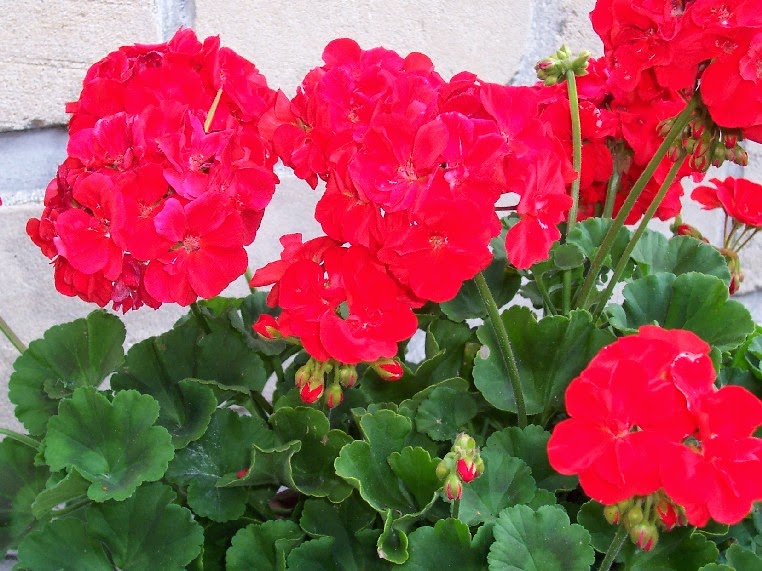
I am very thankful that I have a partner who is as excited and interested in permaculture as I am. Not everyone is lucky enough to have someone as supportive as him in their lives. He is always supportive of my efforts to save the planet, stray animals or a dollar. He recently spent a great many hours building bird houses and a bee house to attract the birds and the bees to our garden so that we could grown our own food without having it devoured by insects. He also bought me several geraniums and other herbs and plant seeds
which I can inter-plant in our garden and under our fruit trees to discourage harmful insects and invite beneficial insects to the garden.
I am also thankful for the members of my permaculture class who are organizing a plant swap for our final PDC weekend. I now that I will be able to get some lovely perennial plants which will be of great use in the garden.
I am particularly greatful for all the valuable knowledge I am gaining from my permaculture class, which is helping me to turn my once run down, bedraggled lawn into something worth bragging about. I now have a budding orchard of semi-dwarf fruit trees, a ten foot diameter herb garden right outside the door that produces nearly all the herbs we can eat, eight industrious little hens that provide us with more organic eggs than we can consume and a pair of charming ducks that we hope will help to control the slug population in our yard while providing hours of amusement to the other two and four legged inhabitants of the homestead. All in all I think I'm a pretty fortunate human being today. I just wanted to take this opportunity to express my gratitude for all the blessings that I have. I am also grateful for each of you who take the time to read my ramblings. I hope that I am able to provide you with something that is of value to you. Today, I am hopeful that you are able to take a few moments to reflect on what you are grateful for. As spring turns to summer and we begin to spend more time out in nature, I hope you will take some time to reflect on how fortunate ware are to have so many beautiful places that we can enjoy and experience the beauty of. Let's all work to keep them beautiful by remembering to live lightly.
Wednesday, April 23, 2014
Years of Living Dangerously
A new ShowTime series examines the causes and impacts of climate change. While I may not agree with every opinion expressed in this show, I have to say that it definitely gets you to thinking about the impacts of human habitation and activity on the planet's ecosystems. It also examines the social impacts of climate change from poverty to, corruption to war. And it looks into the future and the further impacts of these changes on our environment and climate as we progress through the current century. Please take the time to watch the premier which is available free online at this link http://yearsoflivingdangerously.com/
I find that I can still be shocked by the unbelievable willful destruction of our beautiful wild places for no better reason than greed! Perhaps worse than the greed is the apathy and ignorance of our own individual daily choices. We need to examine our own choices and start holding the corporations that supply our daily needs to task for the actions that they take. We need to exercise our votes in the voting booth but also in the market place. We need to be informed so that we can understand what impact our lifestyles and daily choices are having on our potential future and the potential future of humanity as a whole.
Saturday, April 5, 2014
Return of Surplus - First Fruits
Today I was going to do a post on movements moving together, and I'll come back to that, because I think it is important but this morning, while feeding the compost, I was inspired to share with you an experience I had a few years ago while picking blackberries.
One of the permaculture ethics is "fair share", also referred to as "return of surplus" both terms imply several things. They imply, take only what you need and, when you have more than you need, share it with others in your community. They also imply that we should give or leave a fair share for mother earth and that we should share the knowledge of this practice with others. If we only take and take from mother earth and never give back or replenish the soil, eventually it will be unable to produce more food to sustain us. Think of industrial agriculture as strip mining of top soil...but again I digress, we are talking about return of surplus and first fruits (and we'll come to those blackberries by and by.)
For a time we had a small bowl on our dining room table. Before a meal each of us would place a small offering from our plates into the bowl. We would also pour a small amount of our water or juice into the bowl and we would mention one thing that we were feeling thankful for that day. After the meal we would be take it out and poured it on the earth as an offering and a thanks. I miss that bowl. I want to bring it back. It is a connection to our earth that we too easily forget and it is a good reminder of thankfulness practice, which is so important in our hectic day-to-day lives. It is also a reminder that we need to think about serving the earth BEFORE we think about serving ourselves. And this brings me back to those blackberries.
Several years ago I was out picking blackberries. There were some amazing, large, delicious, juicy fruits. I wanted to eat them all. But then I got to thinking, if I eat all of the very best berries then it will be the small, bitter and pour producing plants that reproduce and after some years all that I would have on my land would be nasty little berries that no one would really want to eat unless they had to. Now blackberries being so prolific and birds being what they are, there isn't really a very great danger of that happening too quickly, but the principle still applies and more so with other more tender, less prolific plants. And this is when I had the Aha! moment. I realized that many scriptures and folk wisdom advocate giving back the first fruits. The first fruits would be early ripening, they would also likely be some of the best. It makes complete sense. If we are going to save seed, we choose the best fruits so that we propagate the best of the specimen that we want to preserve. So seed saving is also a way of giving fair share back to the earth. But the idea here is that we need to think of giving FIRST and that we may need to make some sacrifice, but that whatever small sacrifice we make will be more than paid back by the continued fertility and fecundity of the earth.
Wednesday, March 19, 2014
A Little Dose of Inspiration
| Photo from the lexicon of sustainability |
For those of us who have been struggling through a long and difficult winter, and I think that is most of us, a little dose of inspiration sounds pretty good. I came across a great video on YouTube this morning that I will share with you. I also got an email from Hubby with a link to a Mother Earth News article about urban community gardens. I know you've heard urban community garden before, but this one is different. For those of you who are actually living in an urban setting this article is definitely a good read, but those of you living in the burbs or in the country should not disdain to read it as well. I live in what might be termed burban country (lol, yes you read that correctly,) and what really impressed me about this article was how much stronger the community ties became as a result of this project and how much more content and secure the people involved felt. They were actually building community where there had been one in name only, but not in reality.
In the video "Permaculture, a Quiet Revolution" we are taken on a journey to the 8th International Permaculture Convergence in Brazil, where over 200 permaculture design course graduates and their mentors from over 43 countries have gathered to learn and to share their experience in order to prepare for and mitigate the looming global crisis. Their goal, to create sustainability now through self reliance. The only way this goal succeeds is if we all join the (r)evolution and share the message with as many people as possible as often as possible. I hope that you will be inspired and that you will catch the permaculture bug and spread it wherever you go.
Live light!
Sunday, March 16, 2014
For further reading and a helping of Link Soup
Sorry I missed you all yesterday. I was doing the final run through on my presentation and packing up all the things for the farmers' market. The market was a huge success and we even had a few people turn out for my talk on permaculture. Thanks to all those of you who were there. I'm just back from the talk and as promised I'm putting up my suggestions for further reading and links. Since I had already scheduled a serving of Link Soup for the post for this weekend I will append those additional links along with this and that should all come together quite nicely. Just the thing for relaxing in the easy chair with on a blustery Sunday afternoon.
So here you go:
Suggestions for further reading:
– Permaculture: Principles and Pathways beyond Sustainability –
David Holmgren
– Introduction to Permaculture – Bill Mollison
– Gaia’s Garden: A Guide to Home-Scale Permaculture – Toby Henenway
– The Resilient Farm and Homestead – Ben Falk
– Introduction to Permaculture – Bill Mollison
– Gaia’s Garden: A Guide to Home-Scale Permaculture – Toby Henenway
– The Resilient Farm and Homestead – Ben Falk
I should also add (though not strictly permaculture books): Deep
Economy by Bill McKibben and Radical Simplicity by Jim Merkel
Link Soup:
–
350.0rg
–
One Earth (R)evolution (You are here)
- Zones and Sectors Efficient Energy Planning
I'm updating this post to add this great link that Hubby sent me. It gets you thinking.
- What are we putting in our bodies?
I'm updating this post to add this great link that Hubby sent me. It gets you thinking.
- What are we putting in our bodies?
So there you have them folks. Enjoy and I hope to see you all at a permablitz real soon.
Wednesday, March 5, 2014
Sustainable Me and One Earth Revolution Hit the Real World
I've been pretty quiet through the winter months, enjoying my CSA share and delving into research on sustainability and permaculture. Sharing with you when I found something worth the while. As spring approaches Sustainable Me and One Earth Revolution are launching into high gear. We're taking our message out into the real world with presentations, art shows and more. Stay tuned here for more information and event calendar. Some things you can expect: Introduction to permaculture speaking date(s), Lexicon of Sustainability Pop-up Art Show dates, and announcements surrounding the establishment of Hour Share of the Berwicks.
Here is the information on our first event:
Introduction to Permaculture speaking date: March 16th at 12:30 PM at the Berwick Town Hall. 11 Sullivan Street, Berwick, Maine 03901
This event will be held in conjunction with the Berwick Winter Farmers' Market.
Hope to see you all there.
Monday, March 3, 2014
Waste Not Want Not - Made Pet Food Today
I said I was going to do it and I did. This evening in about a half an hour and with some leftover items that might otherwise have gone to waste I made enough pet food to feed these two little darlings for about a week. I had this half eaten duck that we had tossed in the freezer after Christmas dinner. We figured we would do something with it before long. We had boiled the duck yesterday thinking we were going to make soup, but just weren't feeling like it last night and ended up making a simple vegetarian dinner. And then we had this casserole dish full of couscous that was a bit overcooked and mushy. So this evening I picked all the meat off the duck and pureed it in the food processor. I mixed this with the couscous and made a nice thick meat paste which I taste tested on both the cat and the dog. They lapped it up! Literally. So I figured it was a winner and proceeded to package it up in 1/4 cup servings using an ice cream scoop and some squares of wax paper. When I was all done I had about 32 patties in a gallon zip lock.
Now I can just take a couple of patties out in the evening and put them in the refrigerator to defrost. They should be ready to go by the next morning. It will be a nice treat for the pets and will reduce my pet food bill while reducing my waste. I wouldn't give this to them every day, because I'm not sure that it would provide 100% balanced nutrition. I would recommend looking into well researched and recommended recipes on line or check with your vet, if you are planning to start providing all of your pet's food.
This experiment just reminded me that when we use our creativity and think outside the box we can help to reduce waste and supply our own needs while saving money. I think I will probably try this again in the future with other leftovers.
Another great thing about this. Since we eat local meat and organic foods, I know that what I'm feeding my pets is just as healthy as what I'm eating myself, and that is something I can 't be assured of when I am feeding them pet food from the store or even from a local feed store for animals.
Saturday, March 1, 2014
Saving the Soul of the Earth
![]() |
| The magical work of artist Bruno Torfs is featured in the film. Please visit his website. |
Today I would like to share with you a great independent film "Anima Mundi; peak oil, climate change, permaculture and Gaia theory." "Anima Mundi" is an artistic, spiritual and hard hitting look at the current state of the spirit of the world and an introductory instruction manual for saving the soul of the Earth.
Please watch this movie, please listen to the lesson and please, please, share this post with as many people as you can. We need to wake up. I speak to myself as well as to all of you. Americans especially need to wake up and realize that we can not go on using resources at our current levels. The message that we need to share is that we can live completely full, happy and satisfied lives without destroying the world (and we are destroying the world). In fact we can live much happier lives with fewer things. We need to stop listening to the voices in the system that tell us that happiness is found in more and more things. We need to start listening to the voices that remind us that we had a story before cheap energy permitted the growth of our current bloated consumer economy. It was a story that was full of imagination, that created some of the greatest art, and the greatest minds, knowledge and logic the world has known. A story that was peopled with families who lived full, contented lives that did not destroy their environment.
The fact of the matter is that we cannot continue to live a good life if we do not make changes now. This isn't the first time in human history that we have tapped out our resource base leading to desertification, massive human migration and wars of conquest. The fertile crescent was after all once a fertile region filled with cities and farms until the combination of human activity and climate changed tipped it over the edge turning it into a desolate moonscape incapable of supporting human life. Today there are probably more than 10 times as many people on the planet as there were then and we have already expanded into all the habitable regions of the world. The world is already tipping into the area of peak resources. Not just peak oil, but gold, copper, silver and other ores and resources. As these resources become more scarce we are going to have to learn how to utilize the resources that we have already mined by much higher levels of recycling. But we will not solve the problem of peak resources just by recycling. We are also going to have to reduce our overall demand on Earth's resources. If you agree, please join the (r)evolution.
Thursday, February 20, 2014
Variations on a Theme and The No Waste Home
![]() |
| Thanks to: http://www.newphilaoh.com/html/recycling_program.htm |
Waste is an excess output of a system which has not been put to beneficial use. When waste reaches extreme levels it becomes pollution. Let's look at one scenario. If you have 2 acres and you have a cow or two, those cows will produce manure adequate to fertilize the soil. Now if you put 20 cows on those same two acres you are going to have way more manure than you will use as fertilizer. The manure will pile up and rot and create methane gas and when it rains the water that runs off your property and into the nearest stream can lead to excessive algae growth and low oxygen conditions in the water. This same principle of waste becoming pollution applies to far more than just manure.
Permaculture attempts to design integrated systems in which the output of one element of the system becomes the input of another element ultimately creating closed loops which feedback on themselves and generate no waste. The goal of eliminating waste from our systems is one of the primary goals of the One Earth Revolution. With this in mind I would like to suggest that you have a look at the blog of a family who have been living the no waste life in spades. They've done it and they are doing a great job sharing the message, so there is no need for me to reinvent the wheel. I'm just going to share their link here.
Enjoy. I hope it will inspire you to embark on a no waste adventure of your own. Whether it be your home, your office, your home school group or girl or boy scout troop. No attempt is too small and certainly none is too large. Your church, your school, your neighborhood, your village....... Take it as far as you like, as far as you can.
Sunday, February 9, 2014
One Man's Journey - Ben Falk TEDx Talk
Ben Falk's journey to a sustainable life takes an all too familiar route from growing up in the suburbs to some eye opening experiences in college and finally to a small farm in Vermont were he is learning and teaching the use of permaculture principles in creating a sustainable ecosystem on his 10 acre hillside lot.
Ben's TEDx Talk takes you through those experiences and shares some of those eye openers. They are the reasons that we need to get in front of the movement for change and really start making some decisions in our daily lives that can have a positive impact on where things are going. It's not enough to just recycle a few things. It's not enough to car pool once or twice a week or take public transportation instead of driving. We need a radical cultural shift in the way we live and consume.
Please listen to Ben's talk and really let yourself hear the message. Don't take a jaded view or simply look away when he shows you pictures of the devastation wrought by factory farming and livestock feedlots. When you see pictures of tanks in the desert and when he talks about the desertification of the fertile crescent stop, really stop and think about what you are putting on your table. Think about your daily activities and about the things you buy. Think about the energy and resource demands that you as an individual make on the planet. I think many of us who are trying to be more environmentally conscious think "well at least I'm not as bad as that one. He's driving a huge SUV and lives in a 3000 square foot house." Well that may be true, but I would have to guess that the greater number of us could be doing way more than we are to make this a more just, healthy and equitable planet to live on.
Saturday, February 1, 2014
First Earth - Earth First
Greetings all. Sorry I missed you on Wednesday. But as revolutions can not be stopped by the flu, we are coming to you today from the couch. Very grateful for Hubby who has kept me supplied with plenty of fluids to help keep me hydrated and get me on the mend that much quicker. It is such a blessing to have a warm comfortable home in which to recouperate. There are many people in the world who do not have that. In addition to my warm comfortable home I am fortunate enough to be able to afford this computer on which I communicate with you and the electricity and internet connection with which to operate it. I am truly blessed.
Thinking about how blessed I am makes me think of the many people in the world who are not, and the future generations who certainly will not be blessed if we don't rein in our rampant resource destruction and develop gentler more sustainable methods of living on this planet.
The embedded video. "First Earth" takes you on a journey around the world to meet people who are learning and teaching such methods. It also delves in the the very deep, personal and spiritual reasons for the importance of adopting natural building practices. In the interest of blogging etiquette, I will warn you that one person drops the f-bomb early on, but other than that I don't recall any explicit language.
I hope you will enjoy and be impressed and inspired.
Thinking about how blessed I am makes me think of the many people in the world who are not, and the future generations who certainly will not be blessed if we don't rein in our rampant resource destruction and develop gentler more sustainable methods of living on this planet.
The embedded video. "First Earth" takes you on a journey around the world to meet people who are learning and teaching such methods. It also delves in the the very deep, personal and spiritual reasons for the importance of adopting natural building practices. In the interest of blogging etiquette, I will warn you that one person drops the f-bomb early on, but other than that I don't recall any explicit language.
I hope you will enjoy and be impressed and inspired.
Saturday, January 25, 2014
It's Time for a New Economy
So I have been thinking for some time now about doing a post on alternative exchange methods and a "New Economy." I started to write something up about the need to return to more traditional methods of exchange. I'd even purchased a URL and taken other steps in order to start setting up Hour Exchange of the Berwicks. In light of the recent data breaches at Target and Neiman Marcus, the constant fear of identity theft and concerns over financial insecurity, the time for this article seemed more than ripe. And then I saw this graphic! It bares a startling resemblance to my own list. Which got me thinking the time must be even more ripe than I thought. So.... here it is....
![]() |
| Source - https://www.facebook.com/foodisfree |
Let's take it from the top:
Grow your own food or support a local CSA. Growing your own food is a great way to reduce food cost and increase the healthiness of your diet. It is also one more way of bringing the production of our needs closer to home and increasing our security and sustainability in an uncertain world.
Make it yourself. If we make it ourselves, be it clothing or food or whatever, we have taken a big step toward local sourcing. Local sourcing helps to balance costs, prices and wages and reduces the impacts of production and distribution on the environment. Making things ourselves from local materials and ingredients also helps to build the LOCAL economy. There are those who will use the argument that you shouldn't stop buying clothes from Bangladesh or coffee from Africa (etc and so on), because after all the countries that export those goods depend on selling to you for their economy. This is a justification on the part of the corporations who make their money on importing these goods at cut rate prices and selling them at huge mark ups. One of the first ways that we can help improve income equality and fair distribution of wealth is to advocate for higher wages for people who work in these factories. And one way to do that is to refuse to buy the products until the workers are paid a fare wage.
Swap it! Borrowing and sharing really go together. How many of us have tools and other things that we use only very rarely? How many of us buy something because we need it today and we might only need it once or twice a year and perhaps not even that often. If we will share those things, we could reduce the demand for them. (Now watch how this dominoes.) Neighbors begin sharing shovels and snow blowers and other tools. Fewer shovels and snow blowers and other tools are needed, fewer are produced. Environmental impact decreases. More people are sharing. They purchase fewer things. They need less space. They move to smaller homes. They need less money. They work fewer hours or work from home. They commute less, the environmental impact decreases and decreases again.... and so on.
Exchanging time for time (hour for hour) is one way of reducing income inequality and working toward a new economy. Isn't it true that all of us are equally valuable and that all of our labor is equally valuable? But the monetary system that we have established leads people to feel that their worth is based on their income. Hogwash! Exchanging time for time allows us all to be on a level playing field, builds confidence and self worth, and eliminates roadblocks to success and improvement.
Reduce, Reuse, Repair, and Recycle I've already covered these here and here, and I will reiterate here that one of the primary and most important of these is reduce. Reduce, Simplify, Right-Size, work toward sustainability.
What it all boils down to though is that we all need to learn a little something from the folks who have learned to do with less and not just 'make do' but live abundantly and be truly happy, happier perhaps than many of those who think they can only be happy if they have wealth, possessions and power.
Remember life is not in things but in experiences. So experience it and live light.
Wednesday, January 22, 2014
Coffee, Tea or the Environment?
| Just brewing up a cup of "Not Coffee" as I sit down to write this blog |
I have often thought that giving up coffee would be a good idea for health reasons, but then after reading Radical Simplicity by Jim Merkel and learning just how many acres it takes to produce the coffee I drink, I was determined that I needed to give it up for environmental reasons. It was still hard though. I would wake up in the morning exhausted after a long night of tossing and turning and say to myself "I'm just so tired, I've got to have just one cup", then 3PM rolled around and I HAD to have a cup to get my through until 5PM and keep me alert on the long drive home. It was a vicious circle!
This week, after a couple more sleepless nights staring at the ceiling and yet another article on the impact of coffee production and distribution on the environment I knew the time had finally come. I got up in the morning and brewed a cup of herbal tea. I'm not looking back. When I'm really in a pinch I can brew up a cup on my friend Dawnie's famous "not coffee" tea. If you'd like to get your hands on some, you can reach Dawn via her Facebook page Sun Moon Stars Herbals.
For those of you who say, "well that's all well and good for you, but I just can't give up my coffee and/or tea." Fret not! There is a way that you can have your coffee and tea and reduce your impact on the environment. This article has some information about the impact and the options. And this one from the National Resource Defense Council has a more in depth discussion of the topic. And remember, every step you take, even the little ones, make an impact. If everyone who reads this reduces their coffee consumption by even 10% that will be positive impact for the planet. And the more you reduce the more positive the impact.
I hope that you will find these resources informative and helpful. And until next time.... Travel Light!
Wednesday, January 15, 2014
CSA #3 and the Wonders of Refrigeration and Heating
Our latest CSA arrived on Friday and wonder of wonders there were blueberries! Thanks to the wonders of modern refrigeration, I was able to make these fabulous blueberry scones with real local Maine blueberries in the dead of winter. Do I wish that these blueberries were refrigerated using renewable energy? Yes I do. Does this make me want to advocate for my utility company to divest from fossil fuels? Yes it does. It also encourages me to research and advocate for more solar and other alternative energy sources that we and other local food producers can use on our own properties to make our farms more sustainable.
This same feeling applies to the fresh local tomatoes which I purchased today from the local market to go on my veggie burger. I know that the tomatoes are local and were grown in a greenhouse not more than 50 miles from my home, but I don't know where the energy came from that heated the greenhouse. I don't think I'm going to stop buying my fresh locally greenhouse grown tomatoes in February (unless I find that they are very far from sustainable). But I do think it makes sense for us all to keep in mind the total inputs of energy that go into producing, transporting, marketing and storing our food. Armed with this information we can begin to make informed food choices. Making those informed choices is how we are going to make the changes that we need to make in order to heal this planet and keep it going for the next generation and the next.... and the next.
It's getting late and I want to post this so....stay tuned for the scone recipe (special bonus post tomorrow).
Saturday, December 28, 2013
Welcome to the family
Today we adopted 2 ducks, a drake and another chicken. The drake is called Jonathan. He's a beautiful bird. When we came home this afternoon we found him perched on the roof of the woodshed. He then proceeded to fly to the roof of the garage. When he finally decided to come down the edges of his wings made a beautiful angel in the soft new snow that fell yesterday. I wish I had a photo for you of the angel. Here is one of Jonathan at his former home.
His original mom misses him already and is planning to come for a visit soon. He's such a handsome bird that I can't blame her. His two little girlfriends Tootsie and Fuji are settling in quite nicely with their new bunk mates Gladys and the Peeps, our original flock of 8 assorted hens. Pepper, the new chicken (gender yet to be determined), is working on figuring out the pecking order. We've decided that if she turns out to be a he it'll be Sgt. Pepper.
Here is Tootsie with her sister BonBon, who was recently injured by a bird, possibly an owl. Our thoughts are with BonBon and we are hoping she is going to recover.
We are so happy to add these four new feathered friends to our family. They will be great help in the garden come spring when it is time to root out slugs and beetle larva and the pesky shoots of new weeds. They should have the beds well turned, debugged and fertilized for us by the time we are ready to plant. And we'll have the added bonus of duck eggs and perhaps a clutch of ducklings before the summer is over.
So welcome, welcome to Jonathan and friends. May you enjoy many happy seasons in Awen's Garden.
Subscribe to:
Posts (Atom)